Every bourbon has a story behind its label. “Bottled-in-Bond” tells you something specific about the standards behind the whiskey, from where and when it was distilled to how long it aged and the proof at which it was bottled.
The designation requires whiskey from one distiller at one distillery during one distilling season, aged for at least four years in a federally bonded warehouse, and bottled at exactly 100 proof.
At Brother's Bond, we take that commitment further, aging our Bottled-in-Bond Straight Bourbon for a minimum of seven years — three years beyond the required standard.
We chose that additional maturation to develop the richness, depth, and complexity we wanted in this expression.
The requirements establish the foundation. Our decisions about grain selection, maturation, and barrel selection shape the flavor.
What Does Bottled-in-Bond Mean?
The Bottled-in-Bond Act of 1897 helped establish a recognizable standard for American whiskey, giving consumers greater assurance about what was inside the bottle.
At a time when whiskey quality and authenticity could vary considerably, the designation introduced requirements designed to establish greater transparency and consistency in production.
Today, Bottled-in-Bond remains a meaningful distinction in American whiskey.
To qualify as Bottled-in-Bond bourbon, a whiskey must meet several specific requirements:
-
One distiller and one distillery. The whiskey must come from the same distiller at a single distillery.
-
One distilling season. All whiskey must be distilled during the same defined six-month season, either January through June or July through December.
-
At least four years of aging. The whiskey must mature for a minimum of four years in new, charred oak barrels.
-
Federally bonded warehouse. The whiskey must be aged in a federally bonded warehouse under the applicable regulatory requirements.
-
Exactly 100 proof. The finished whiskey must be bottled at 50% alcohol by volume.
-
No added coloring or flavoring. Bottled-in-Bond bourbon must retain the natural character of the whiskey. Pure water may be added to reach the required bottling proof.
Together, these standards establish clear expectations for how the whiskey is produced, matured, and bottled.
Brother's Bond Bottled-in-Bond follows these requirements while going beyond the minimum aging period, maturing for at least seven years before bottling.
Why We Chose Seven Years
Four years meets the minimum aging requirement for Bottled-in-Bond bourbon. At Brother's Bond, we chose to go further, aging our expression for a minimum of seven years — three years beyond the required standard.
That additional maturation allows the whiskey more time to interact with the charred oak barrel, developing the richness, depth, and complexity we were seeking.
As bourbon ages, the relationship between the spirit and the wood continues to evolve. Compounds from the oak contribute aromas, flavors, and texture, while changes during maturation help shape the whiskey's overall character.
But longer aging alone doesn't guarantee a better bourbon. What matters is how the whiskey develops over time and when it reaches the flavor profile the whiskey maker wants to achieve.
For Brother's Bond Bottled-in-Bond, our distinctive high-rye mash bill contributes spice and structure, while extended barrel maturation develops complementary layers of sweetness, oak, and warmth.
The result is a bourbon that reflects both the discipline of the Bottled-in-Bond tradition and our commitment to creating a rich, balanced, and distinctive whiskey.
Barrel Selection Brings the Purpose into Focus
Two barrels can spend the same amount of time aging and still develop different characteristics.
Factors such as barrel placement, warehouse conditions, and natural variations in the wood can influence the way bourbon matures.
That's why careful barrel selection is an important part of creating a finished whiskey.
At Brother's Bond, Ian Somerhalder and the blending team evaluate the flavors, aromas, texture, and finish of selected barrels to achieve the character envisioned for each expression.
For our Bottled-in-Bond, those decisions are made within the designation's strict production requirements.
All selected whiskey must originate from the same distillery and distilling season and satisfy the applicable maturation standards.
Within that framework, barrel selection allows the team to bring together complementary characteristics while preserving the whiskey's distinctive identity.
The goal is a bourbon that delivers complexity without sacrificing balance, with layers of flavor that evolve naturally from the first sip to the finish.
For a closer look at the importance of barrel selection and blending, explore Inside the Blending Room: How Brother's Bond Builds a Bourbon.
What You'll Find in the Glass
Brother's Bond Bottled-in-Bond is crafted from a distinctive high-rye mash bill of 51% corn, 39% rye, and 10% malted rye.
Aged for a minimum of seven years and bottled at 100 proof, it is also non-chill filtered, helping preserve the whiskey's natural character and texture.
The result is a rich, full-bodied bourbon with layers of flavor to explore.
On the nose, aromas of vanilla, toasted oak, and caramel are complemented by subtle baking spices and dried fruit.
The palate offers notes of butterscotch, toffee, and maple syrup, balanced by spice reminiscent of cinnamon and nutmeg.
The finish is long and warming, with lingering notes of oak, vanilla, and caramel.
Of course, tasting is personal. Take a small sip and notice which flavors stand out to you. Does the sweetness arrive first? Does the spice develop afterward? What lingers through the finish?
Discovering those nuances is part of what makes exploring bourbon so enjoyable.
Why 100 Proof Matters
One of the defining characteristics of Bottled-in-Bond bourbon is its required bottling strength of exactly 100 proof, or 50% alcohol by volume.
Proof influences more than alcohol intensity. It can also affect how flavors are perceived, the whiskey's texture, and the overall tasting experience.
At 100 proof, Brother's Bond Bottled-in-Bond delivers a full-bodied character that allows its layers of sweetness, spice, and oak to come through.
That intensity makes it particularly enjoyable for those who appreciate a more robust bourbon experience, whether sipped neat, over ice, or enjoyed in a classic whiskey cocktail.
For a different perspective, try a small pour neat before adding a few drops of water.
Notice how the aromas and flavors change as the whiskey opens up. Some characteristics may become more pronounced, while others soften.
There's no single correct way to enjoy bourbon. Exploring how proof and dilution influence your experience is part of discovering what you prefer.
Straight Bourbon, Bottled-in-Bond, and Cask Strength
As you explore American whiskey, you'll encounter several terms that describe different aspects of how a bourbon is produced and bottled.
Understanding these distinctions can make choosing your next whiskey easier.
Straight Bourbon
Straight bourbon must meet the legal production requirements for bourbon and be aged for at least two years in new, charred oak barrels.
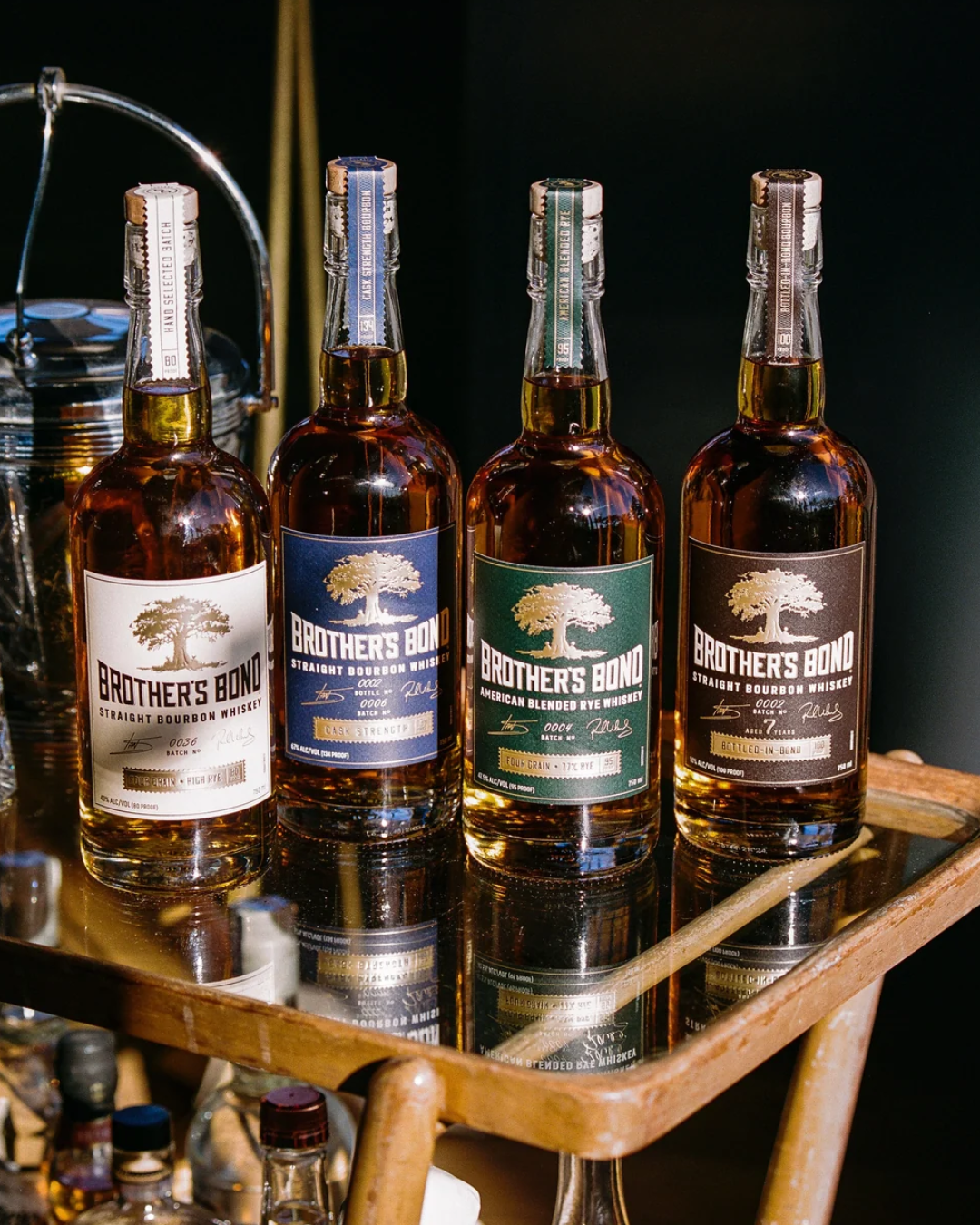
Brother's Bond Original Straight Bourbon, for example, is aged for a minimum of four years and crafted by blending three distinct bourbon mash bills.
Bottled-in-Bond Bourbon
Bottled-in-Bond introduces additional production requirements, including a single distillery and distilling season, a minimum of four years of aging in a federally bonded warehouse, and bottling at exactly 100 proof.
Brother's Bond Bottled-in-Bond extends that maturation period to a minimum of seven years and uses its own distinctive high-rye mash bill.
Cask Strength Bourbon
Cask strength describes whiskey bottled at its natural barrel strength, without dilution to a lower bottling proof.
Brother's Bond Original Cask Strength is bottled uncut and unfiltered, preserving the intensity and character of the selected whiskey.
These descriptions aren't rankings of quality. They represent different production standards and approaches, each offering a distinct whiskey experience.
To explore the foundations of these classifications, read Bourbon vs. Straight Bourbon: What's Actually the Difference?
A Bourbon Recognized for Its Craftsmanship
Brother's Bond Bottled-in-Bond reflects our commitment to thoughtful grain selection, extended maturation, and careful barrel selection.
That approach has also earned international recognition, including Platinum honors at the 2026 New York World Spirits Competition.
While awards offer an independent acknowledgment of quality, the experience in the glass remains our most important measure.
We believe great bourbon should offer something worth discovering, whether you're exploring its aromas for the first time, appreciating the layers of flavor, or sharing a pour with good company.
Experience Our Seven-Year Bottled-in-Bond
Bottled-in-Bond represents an important tradition in American whiskey, combining clearly defined production standards with a commitment to authenticity.
At Brother's Bond, we've built on that foundation with a distinctive high-rye mash bill, a minimum of seven years of aging, non-chill filtration, and careful barrel selection.
The result is a bourbon designed to deliver richness, complexity, and balance, with a character that reflects the decisions made throughout its production.
Whether enjoyed neat, over ice, or in a favorite cocktail, our Bottled-in-Bond offers another way to explore the craftsmanship behind Brother's Bond.
Explore Brother's Bond Bottled-in-Bond Straight Bourbon and discover what seven years brings to your glass.
Because great bourbon is made to be shared.