If you've ever browsed the whiskey aisle, you've probably noticed that some bottles are labeled "Bourbon Whiskey" while others say "Straight Bourbon Whiskey."
Is there a difference? And does straight bourbon mean better bourbon?
The answer comes down to a few important production standards, particularly how long the whiskey has been aged.
Understanding those distinctions can help you make a more informed choice and appreciate the craftsmanship behind what's in your glass.
What Makes Bourbon, Bourbon?
Bourbon is a distinctly American whiskey, produced according to specific federal standards.
To be legally classified as bourbon whiskey, it must meet several requirements:
-
Made in the United States. Bourbon can be produced anywhere in the country, not just Kentucky.
-
Made from at least 51% corn. The remaining grains can include rye, wheat, barley, or other cereal grains.
-
Distilled at no more than 160 proof. This helps preserve the character of the grain.
-
Entered into new, charred oak barrels at no more than 125 proof. These barrels play an essential role in developing bourbon's flavor and color.
-
Bottled at a minimum of 80 proof. That's 40% alcohol by volume.
-
No added coloring or flavoring. Bourbon develops its color and characteristic flavors naturally through production and maturation.
One detail that surprises many whiskey drinkers is that bourbon has no specified minimum aging period. It must be stored in new, charred oak containers, but there is no requirement that it remain there for a particular number of years.
That's where straight bourbon comes into the picture.
What Makes Straight Bourbon Different?
Straight bourbon must meet all the requirements of bourbon whiskey, with one important additional condition: it must be aged for at least two years in new, charred oak barrels.
That minimum maturation period allows the whiskey more time to interact with the wood, developing the aromas, flavors, and color associated with aged bourbon.
During maturation, whiskey can develop notes of vanilla, caramel, toasted oak, and baking spices, while gradually gaining complexity and character.
But the term "straight" doesn't guarantee a particular taste, nor does it automatically mean one bourbon is better than another.
It simply tells you that the whiskey meets an additional aging requirement.
Both bourbon and straight bourbon must be produced without added coloring or flavoring. Those restrictions aren't exclusive to straight bourbon.
Bourbon vs. Straight Bourbon: The Key Differences
| Requirement | Bourbon | Straight Bourbon |
|---|---|---|
| Produced in the United States | Yes | Yes |
| At least 51% corn | Yes | Yes |
| New, charred oak containers | Yes | Yes |
| Minimum aging | No specified minimum | At least 2 years |
| Added coloring or flavoring | Not permitted | Not permitted |
| Minimum bottling proof | 80 proof | 80 proof |
| Age statement | Required if under 4 years | Required if under 4 years |
Essentially, all straight bourbon is bourbon, but not all bourbon qualifies as straight bourbon.
What Does the Age Statement on a Bourbon Bottle Mean?
Another useful detail when reading a whiskey label is the age statement.
Under U.S. regulations, bourbon aged for less than four years must disclose its age on the label, even if it qualifies as straight bourbon.
For bourbon aged four years or longer, an age statement is generally optional.
That means a bottle labeled Straight Bourbon Whiskey without a specific age statement will generally contain whiskey aged at least four years.
If a bourbon is made by combining barrels of different ages, the age statement generally reflects the youngest whiskey in the blend.
For example, a bourbon containing whiskey aged four, five, and six years would ordinarily be described as four years old, even though some of its components had matured longer.
It's an important distinction because a whiskey's age statement tells you its minimum maturity, not necessarily the age of every barrel used.
Can Straight Bourbon Be Blended?
Yes, and this is one of the more interesting aspects of bourbon production.
The word "straight" doesn't mean that a bourbon must come from a single barrel or a single grain recipe.
Straight bourbon can be created by combining multiple barrels, including bourbons made from different mash bills, provided the components meet the applicable production requirements.
For a combination of straight bourbons to retain the straight bourbon designation, those whiskeys must be produced in the same state and meet the relevant standards.
This is different from the regulated category of "blended bourbon whiskey," which can involve other permitted whiskey or spirits components.
Blending qualifying straight bourbons gives whiskey makers an opportunity to create a distinctive and consistent flavor profile.
Individual barrels can develop different characteristics during maturation. One may offer pronounced spice and oak, while another contributes sweetness, richness, or a softer finish.
Through careful selection and blending, those characteristics can be brought together in a way that creates greater balance and complexity.
For a closer look at how this process works, read Inside the Blending Room: How Brother's Bond Builds a Bourbon.
How Brother's Bond Approaches Straight Bourbon
For Brother's Bond, the straight bourbon designation provides the foundation, while grain selection, barrel maturation, and blending help shape the whiskey's individual character.
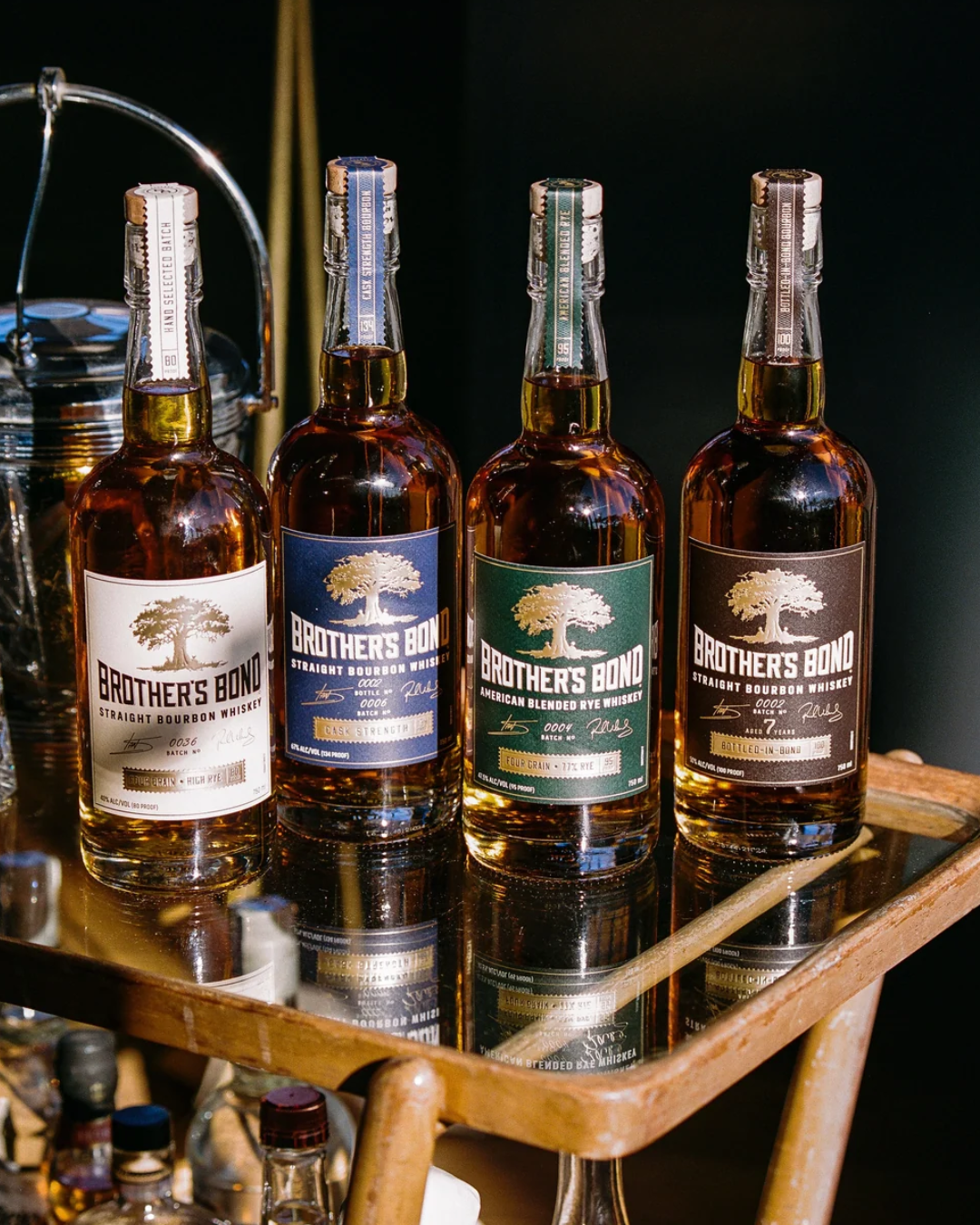
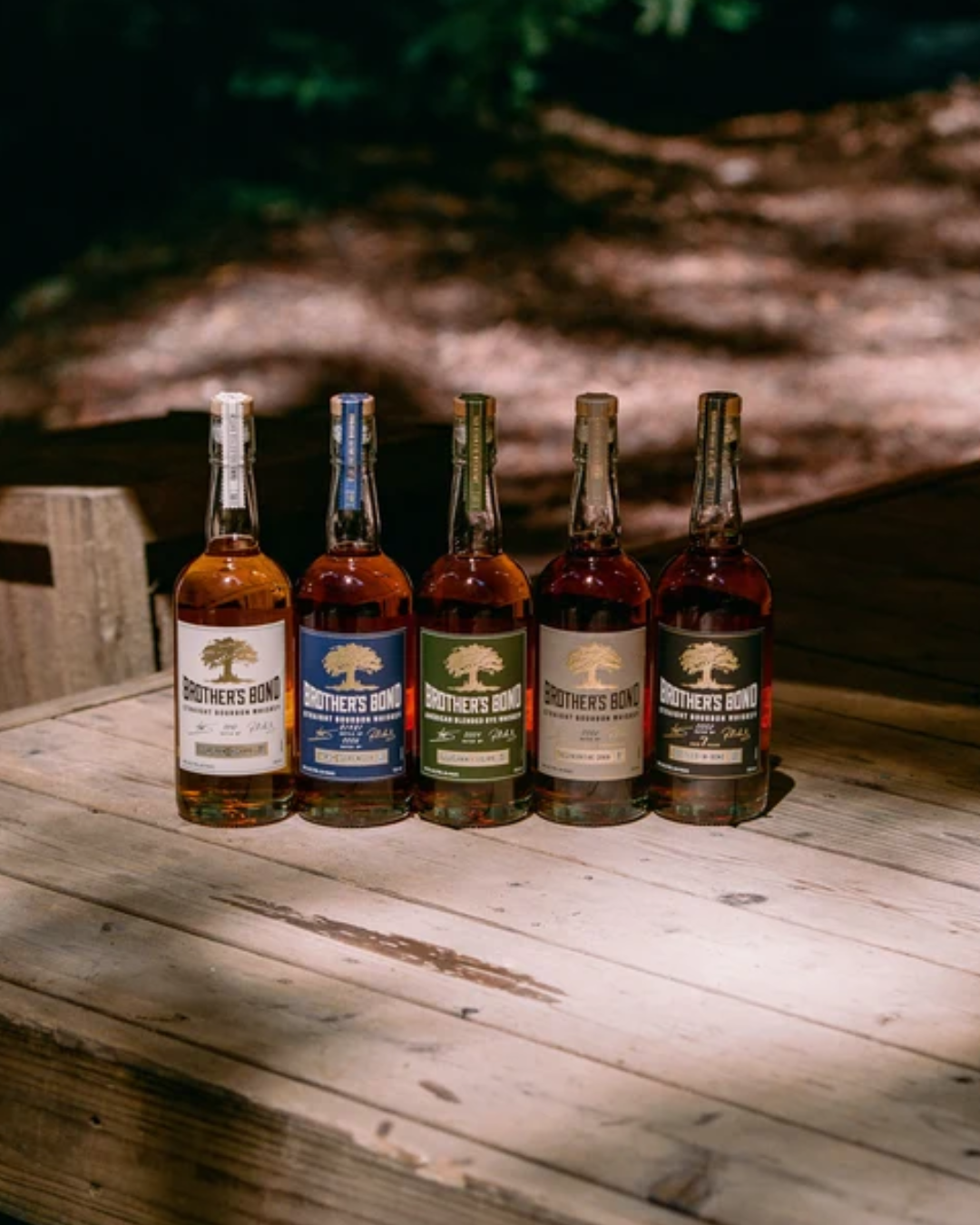
Brother's Bond Original Straight Bourbon is aged for a minimum of four years and crafted by blending three distinct bourbon mash bills.
Together, they create a four-grain bourbon featuring corn, rye, wheat, and malted barley, with a relatively high proportion of rye contributing spice and structure.
Each bourbon component is matured in new, charred American white oak barrels before carefully selected barrels are brought together to achieve the desired flavor profile.
The result is a balanced bourbon with complementary layers of sweetness, spice, and oak, designed to be enjoyed neat, over ice, or in a favorite whiskey cocktail.
While the straight bourbon designation establishes the minimum production standards, it's the decisions made throughout maturation and blending that give each whiskey its own identity.
Does Older Straight Bourbon Mean Better Bourbon?
Not necessarily.
It's easy to assume that more years in a barrel automatically create a better whiskey, but maturation is more nuanced than that.
As bourbon ages, its interaction with oak changes its flavor, aroma, and texture.
Additional time can develop greater depth and complexity, but extended aging can also introduce stronger oak and tannin characteristics that may not appeal to every palate.
Factors such as the grain recipe, barrel char, warehouse conditions, and climate all affect how a whiskey matures.
The ideal aging period depends on the character the whiskey maker wants to achieve.
For some bourbons, four or five years may deliver an appealing balance of sweetness, spice, and oak. Others benefit from additional maturation.
The best way to explore these differences is to taste bourbons of different ages and discover the flavors you enjoy most.
What About Bottled-in-Bond Bourbon?
As you become more familiar with bourbon labels, you may also encounter another designation: Bottled-in-Bond.
While straight bourbon requires at least two years of aging, Bottled-in-Bond whiskey must meet additional standards established by the Bottled-in-Bond Act of 1897.
Among those requirements, the whiskey must be produced at a single distillery during one distilling season, aged for at least four years in a federally bonded warehouse, and bottled at exactly 100 proof.
Brother's Bond Bottled-in-Bond Bourbon takes that commitment to maturation further, aging for a minimum of seven years.
It's an opportunity to explore how a different grain recipe, extended maturation, and higher proof can create a distinctive bourbon experience.
Understanding the Label Is Just the Beginning
Knowing the difference between bourbon and straight bourbon makes navigating the whiskey aisle a little easier.
Bourbon must meet specific American production standards. Straight bourbon adds a minimum of two years of aging, while other designations, such as Bottled-in-Bond, introduce further requirements.
But regulations tell only part of the story.
The grain recipes, barrel selection, maturation, and blending decisions made by the whiskey maker ultimately shape what you experience in the glass.
Whether you're new to bourbon or expanding your collection, understanding these distinctions can make exploring different expressions even more enjoyable.
Start with Brother's Bond Original Straight Bourbon and discover how thoughtful craftsmanship brings flavor, complexity, and balance together.
Because great bourbon is made to be shared.